Develop your Individual Oral in three connected stages, starting with your IDEAs. Your fields save in this browser; download your work for your teacher and retain the process record.
✅ Auto-saved
Version history:
Version History
Loading versions...
Click "Restore" to revert to any saved version. Up to 50 versions are stored.
Use your own classwork and annotations. Open the stage you need; your Global Issue and thesis remain available in the evidence panel.
1 · IDEAs → thesis + Global Issue
Get Ready → Do → Done
Get Ready
Open your own classwork and annotations for both works.
Use Stages of IDEAs to develop their implications.
Combine them into a thesis and identify its Global Issue.
Done
Your thesis connects the IDEAs and addresses a specific Global Issue.
Step 4Your IDEAs, thesis and Global Issue✅ Complete
▶
Use your own classwork. Start with the IDEAs you want to explain, develop their further stages and implications, then combine them into a thesis. Identify the Global Issue that this argument addresses.
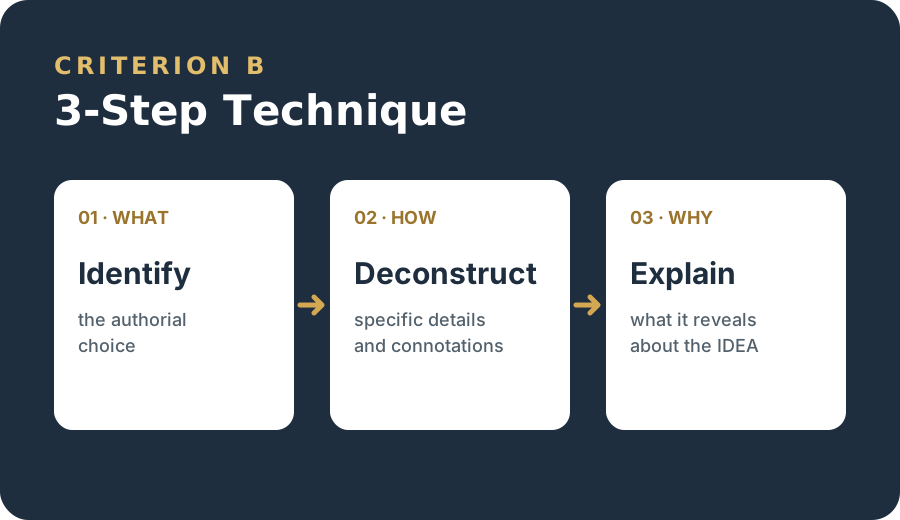
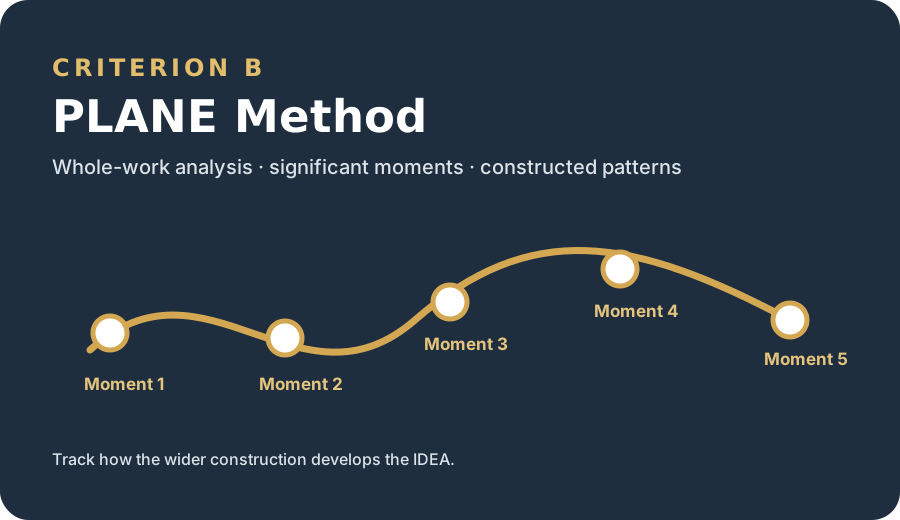
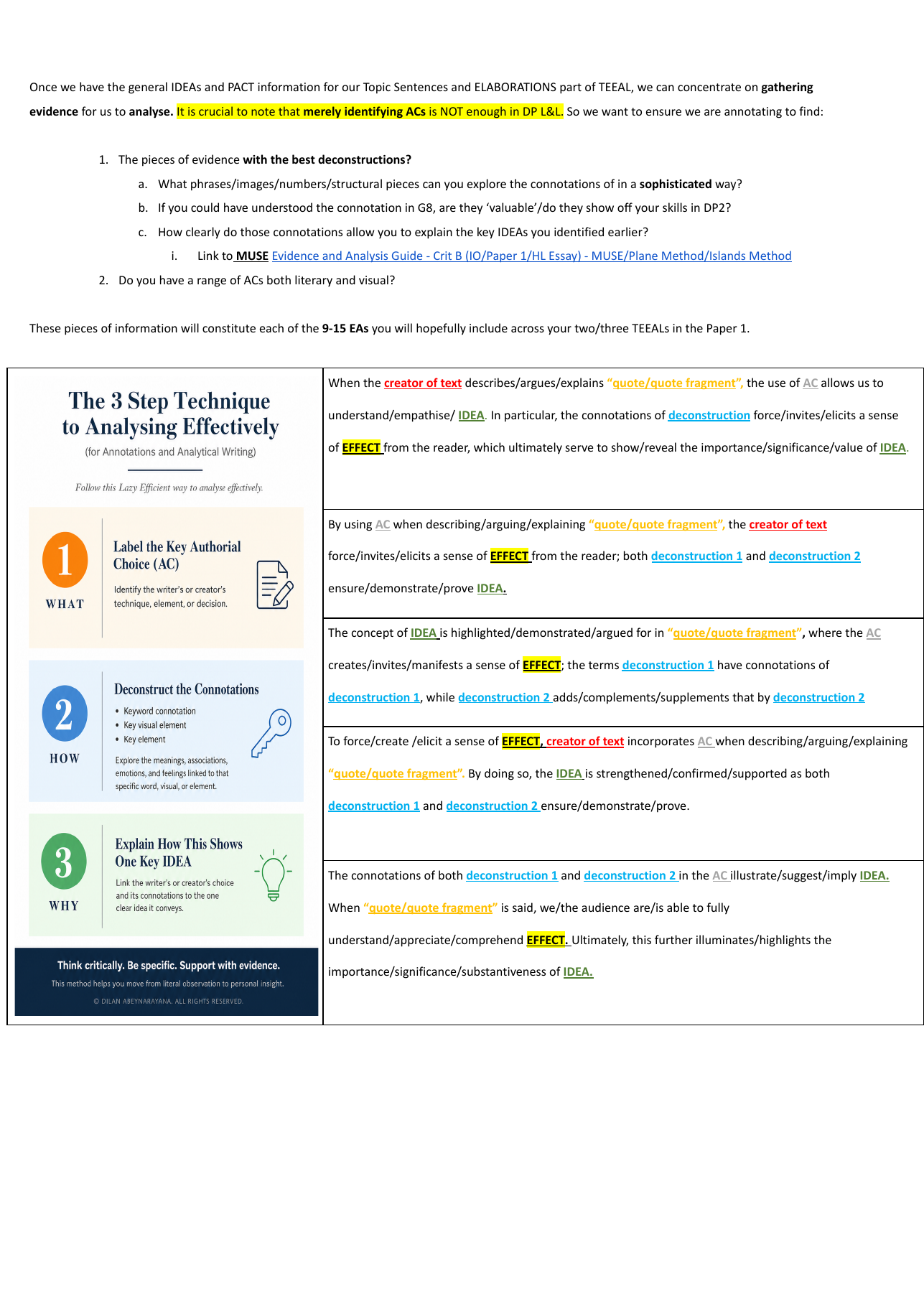
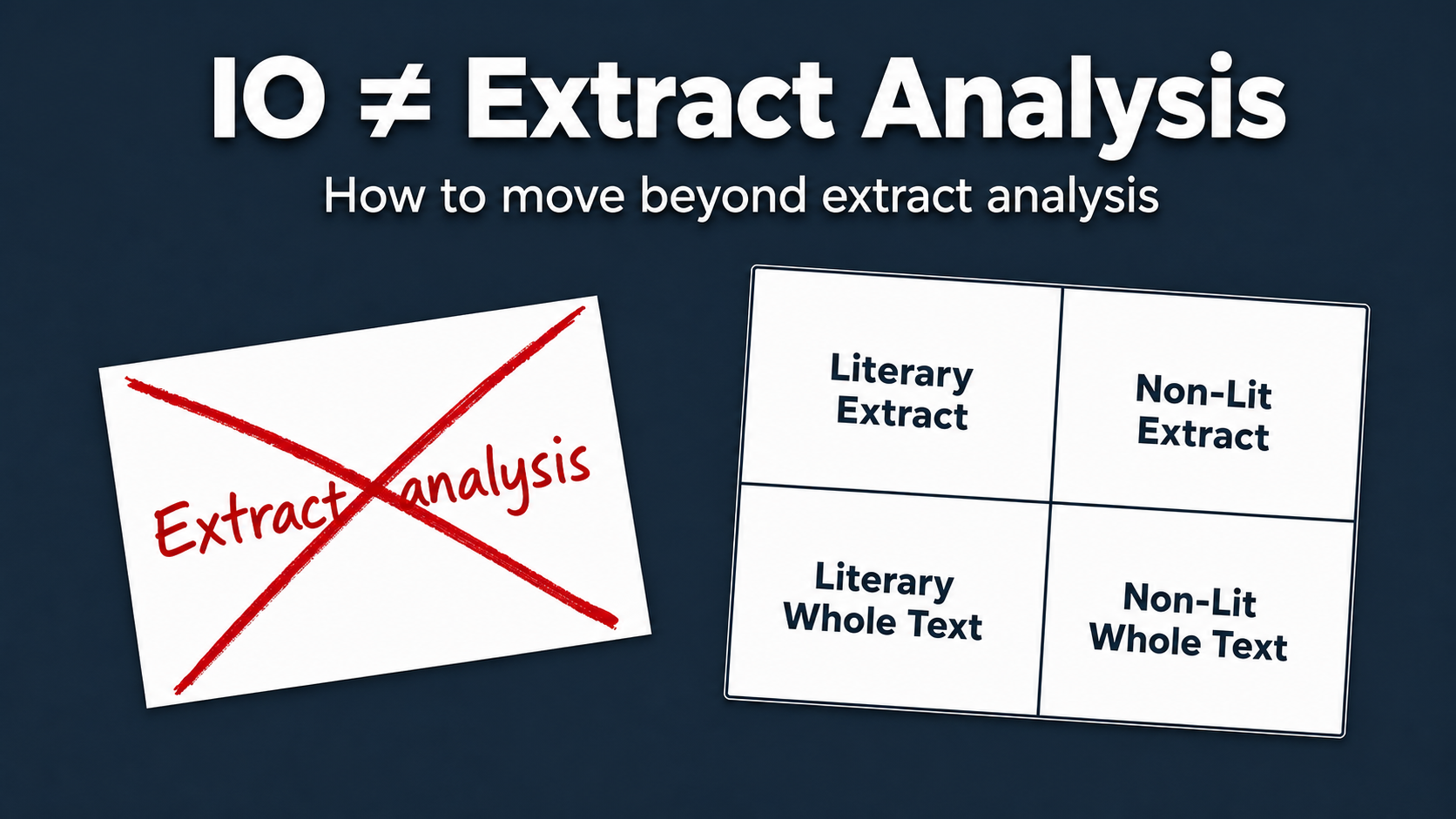
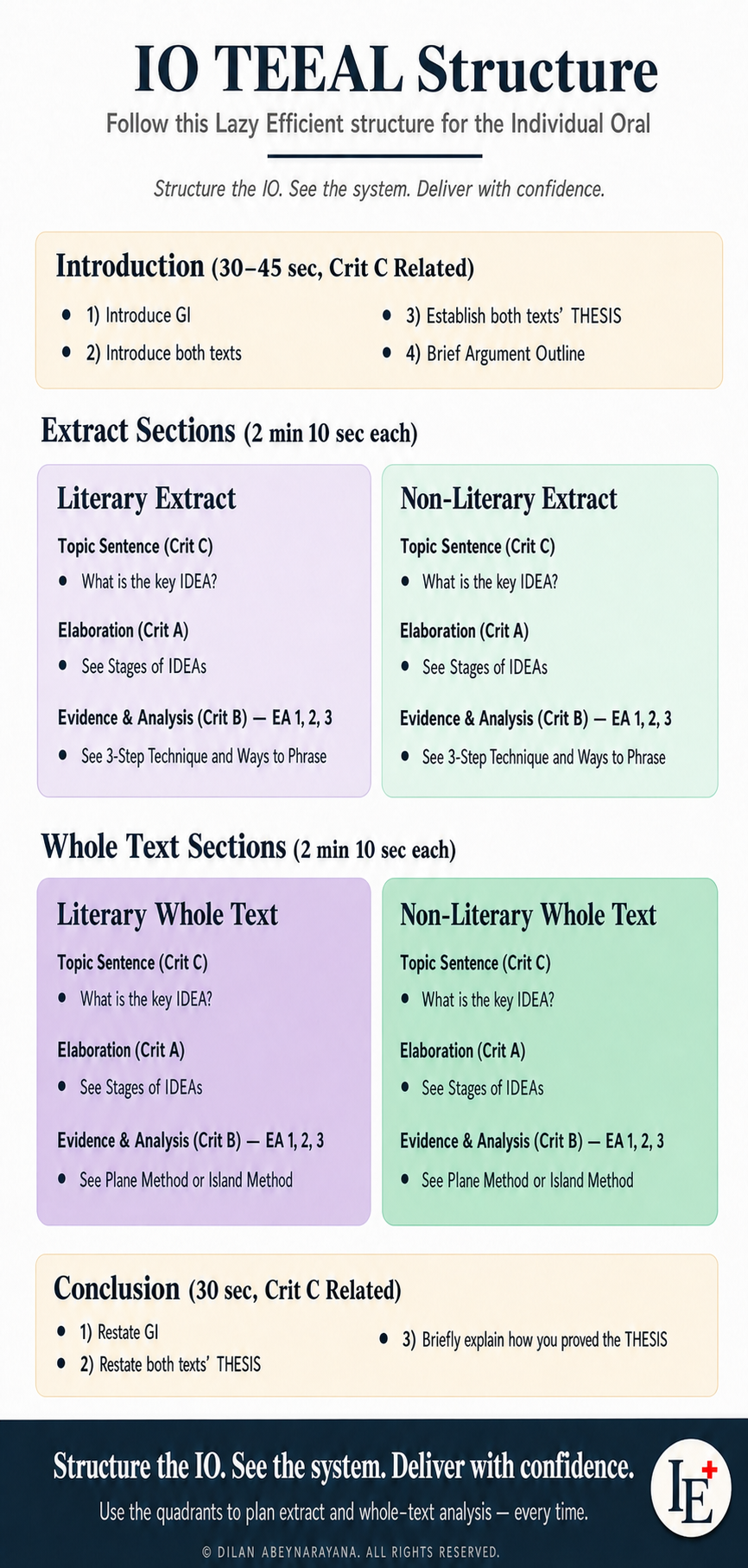
Use one selected extract for each work and develop three 3-Step EAs from it. For the whole-work TEEAL, you can use one PLANE construction with three key moments, or three mini extracts analysed as 3-Step islands. Deconstruct the details to show how they develop your IDEA and Global Issue.
Maximum 10 prompts for the full IO; 6 prompts for the two-extract-only half-IO practice.
15 words or symbols per bullet maximum. A symbol replacing a word (for example &, →, Δ or an emoji) counts as one word. No portmanteaus or hidden scripts.
Keywords, brief quotations, authorial choices and IDEA/GI connections only. No full sentences, extended prose or memorised scripts.
Use these prompts with your unannotated extracts, which you may bring into the IO room.
Your teacher may give feedback on the bullet-point outline once only. Plan carefully before requesting that feedback.
Good: Metaphor “home in memory” → fractured identity & loss of belonging Not suitable: The author uses a metaphor to show that the refugee feels disconnected from home.
Film: 3–4 screenshots and dialogue transcript from approximately 15–45 seconds.
Poem: full poem if short; approximately 20 lines if longer.
Literary extract: at most 40 lines; normally shorter, proportionate to the non-literary extract.
Photography/artwork: one work only.
Print unannotated extracts and your permitted 10-point outline.
Global Issue:
Literary Work:
Literary Extract:
Non-Literary Work:
Non-Literary Extract:
Your 10 Bullet Points:
Step 8Final IO Outline Form✅ Complete
▶
The official form for your IO.
Official IO bullet-point rules (SWIS)
Maximum 10 prompts for the full IO; 6 prompts for the two-extract-only half-IO practice.
15 words or symbols per bullet maximum. A symbol replacing a word (for example &, →, Δ or an emoji) counts as one word. No portmanteaus or hidden scripts.
Keywords, brief quotations, authorial choices and IDEA/GI connections only. No full sentences, extended prose or memorised scripts.
Use these prompts with your unannotated extracts, which you may bring into the IO room.
Your teacher may give feedback on the bullet-point outline once only. Plan carefully before requesting that feedback.
Good: Metaphor “home in memory” → fractured identity & loss of belonging Not suitable: The author uses a metaphor to show that the refugee feels disconnected from home.
All your work is auto-saved in your browser (localStorage). Download to keep a permanent copy.
🧠 L&L Deliberate Practice AI examiner-trained
Why this AI cannot review a full draft
The IB allows guidance during preparation and feedback on IO outlines, but teachers must not rehearse the actual assessed oral with students. This site therefore provides targeted preparatory support only. It will not review a complete script or conduct a full rehearsal of your assessed IO.
Use only assistance your teacher permits and disclose your AI use. Any AI-generated material included in assessed work must be acknowledged in the text and bibliography. Keep your process record for teacher review. The site’s full-review restriction is a teaching boundary; it is not a claim that every AI interaction counts as a formal IB feedback round.
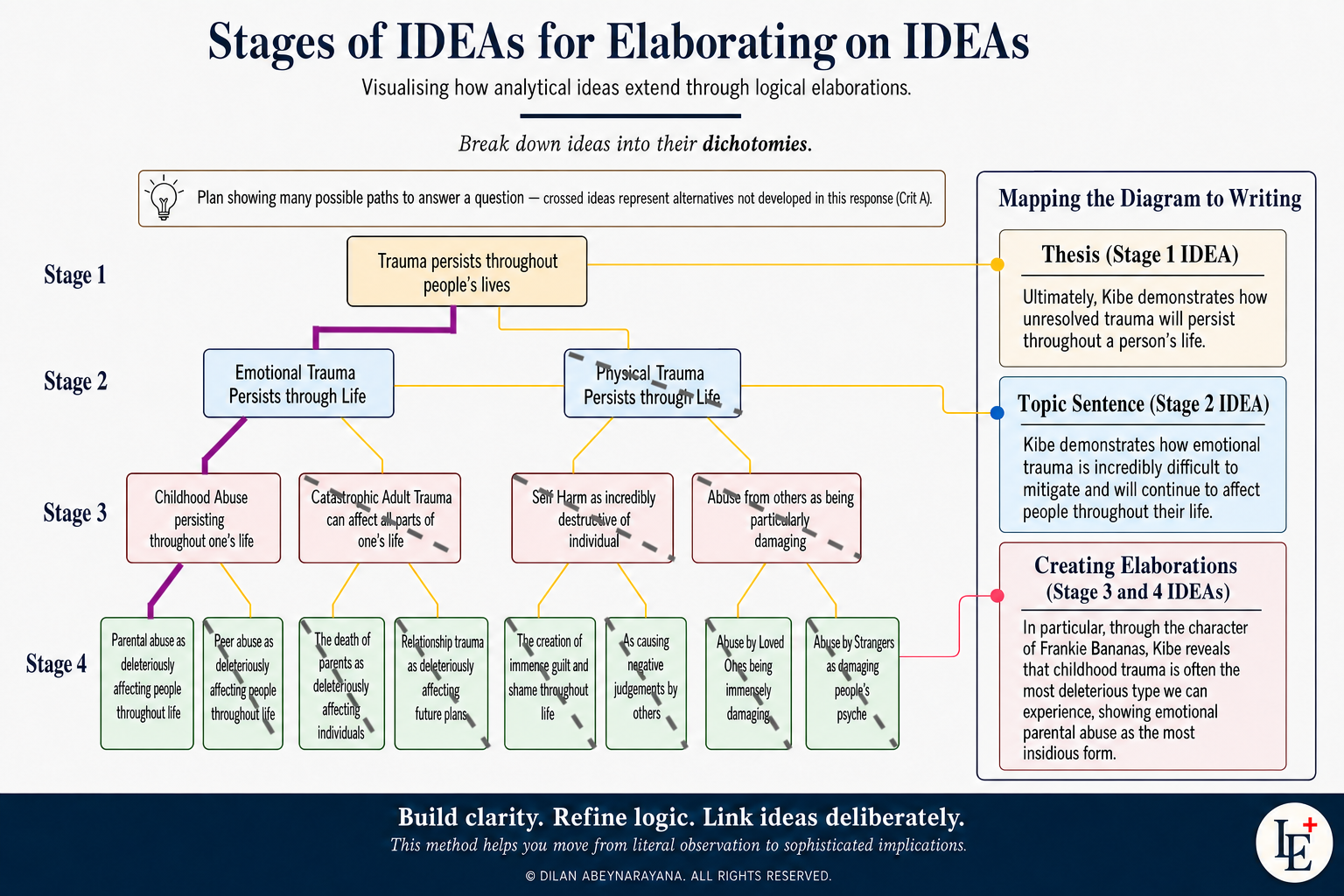
 Expand a single IDEA into a full paragraph